Ex Booths
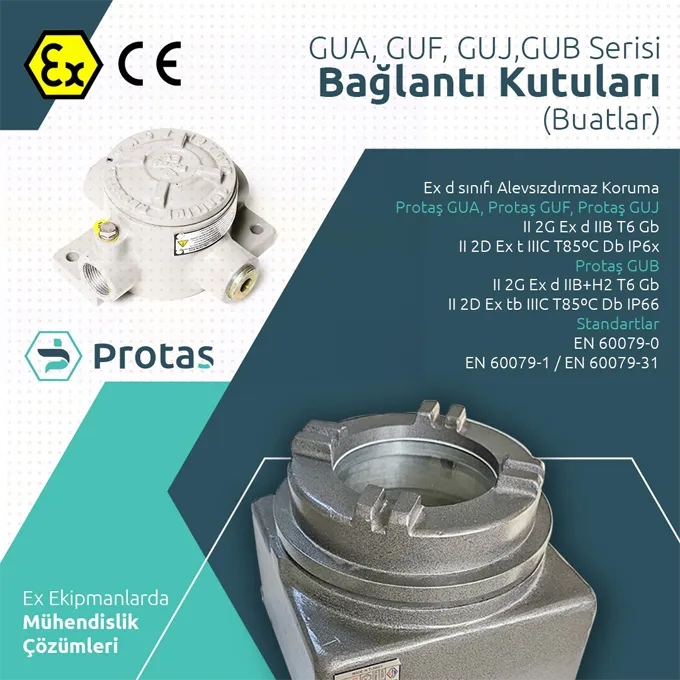
Ex Booths
Ex Boxes and Standards
Ex-proof junction boxes are special closed systems with explosion-proof features. These types of junction boxes prevent the effects of electrical and electronic equipment used in hazardous and explosive environments that could damage the environment. In this text, we will examine what ex-proof junction boxes are, how they work, and why they are used.
Ex-proof junction boxes are designed to protect electrical devices used in environments potentially containing explosive gases, vapors, or dust. These environments are generally hazardous areas such as the petroleum and gas industry, chemical plants, refineries, mines, and similar locations. Explosion-proof junction boxes minimize the risk of explosion by preventing sparks caused by explosive substances or flammable gases from entering or escaping.
Ex-proof junction boxes consist of three main components: cover, body, and sealing system. These components are designed to manage the high pressures and temperatures that may occur during an explosion. While the cover protects the electrical devices inside, the body and sealing system provide an explosion-proof seal.
These types of junction boxes must generally comply with international standards and certifications. For example, the ATEX (Atmosphères Explosibles) directive defines the requirements for explosion-proof equipment used in the European Union. Similarly, certifications such as UL (Underwriters Laboratories) or FM (Factory Mutual) in the United States verify the safety standards of junction boxes.
Ex-proof junction boxes are critical for ensuring the safety of employees and facilities. Explosion-proof enclosures enable the use of electrical equipment in environments with explosion risks and help prevent potential accidents. Therefore, junction boxes are among the widely used safety measures in industrial operations.
Some important standards applicable to ex-proof junction boxes (explosion-proof enclosures) are listed below:
-
ATEX (Atmosphères Explosibles): This is a directive that sets the requirements for equipment used in explosive atmospheres in the European Union. This standard provides criteria for the design, manufacture, assembly, and operation of ex-proof equipment used in explosion-hazardous environments.
-
IECEx (International Electrotechnical Commission System for Certification to Standards Relating to Equipment for Use in Explosive Atmospheres): This standard defines the requirements for certification and compliance of equipment used in explosive atmospheres internationally. IECEx manages the testing and certification processes for ex-proof junction boxes and other explosion-proof equipment.
-
UL (Underwriters Laboratories): This is an organization that sets safety standards and provides certification for ex-proof equipment used in the United States. UL standards verify that electrical devices used in explosive environments are safe and suitable.
-
FM (Factory Mutual): This is an organization operating in the field of industrial safety and risk management in the United States. FM standards evaluate and certify the performance and safety features of explosion-proof equipment.
-
NEC (National Electrical Code): This is a standard regulating electrical installations in the United States. NEC provides instructions and requirements for the installation and use of explosion-proof equipment.
These standards provide guidelines and criteria for the design, manufacture, testing, and certification of ex-proof junction boxes. Relevant countries and regions typically establish compliance requirements with these standards to ensure the safe use of explosion-proof equipment.
Ex-proof junction boxes (explosion-proof enclosures) have a wide range of applications in various industries where there is an explosion risk. Here are some examples:
-
Petroleum and Gas Industry: Ex-proof junction boxes are commonly used in farms such as refineries, petrochemical plants, gas storage areas, and drilling wells within the petroleum and gas industry. Explosive gases and vapors are frequently present in these facilities, and junction boxes ensure the safe operation of electrical equipment.
-
Chemical Industry: Chemical plants, laboratories, and storage areas are environments carrying explosion risks. Ex-proof junction boxes protect electrical equipment used in these facilities and minimize the potential explosion hazard.
-
Mining: Mines can be environments that include explosive dust and gases. Ex-proof junction boxes protect the electrical components of mining equipment and reduce the explosion risk.
-
Energy Production: Ex-proof junction boxes are used in energy production plants such as power plants, nuclear facilities, and renewable energy sources. Explosive atmospheres may form in these facilities, and junction boxes provide a safe electrical infrastructure.
-
Maritime and Offshore: Ex-proof junction boxes are used in hazardous environments within the maritime industry and offshore facilities. Oil platforms, ships, port facilities, and the shipbuilding industry are common areas where junction boxes are frequently used.
-
Food and Beverage Industry: Ex-proof junction boxes play an important role in food and beverage industry facilities such as flour mills, bakery plants, and alcoholic beverage production sites where explosive dust can form. Explosion-proof equipment is used in these facilities to meet hygiene and safety standards.
These are just some of the main sectors where ex-proof junction boxes are used. Other potential application areas include automotive, pharmaceutical, electronics manufacturing, waste management, and the aerospace industry. In any environment with an explosion risk, ex-proof junction boxes are a critical element for ensuring safety and preventing potential explosion hazards.